 Français
 English
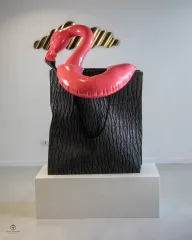
BEYOND REALITY [2026]
Material: Mass-colored concrete, oiled and waxed
Copies: Unique piece
Dimensions: Variable
Description:
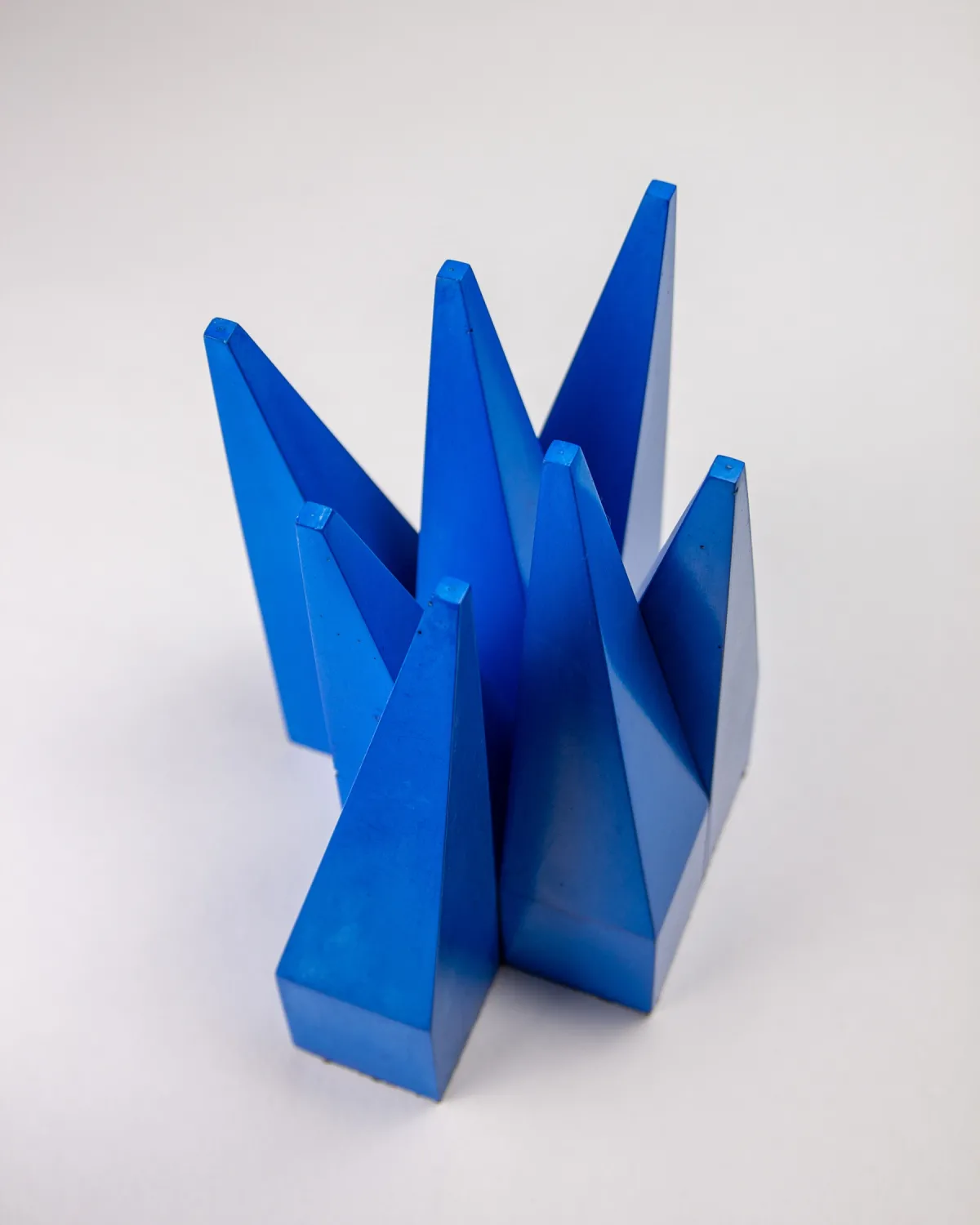
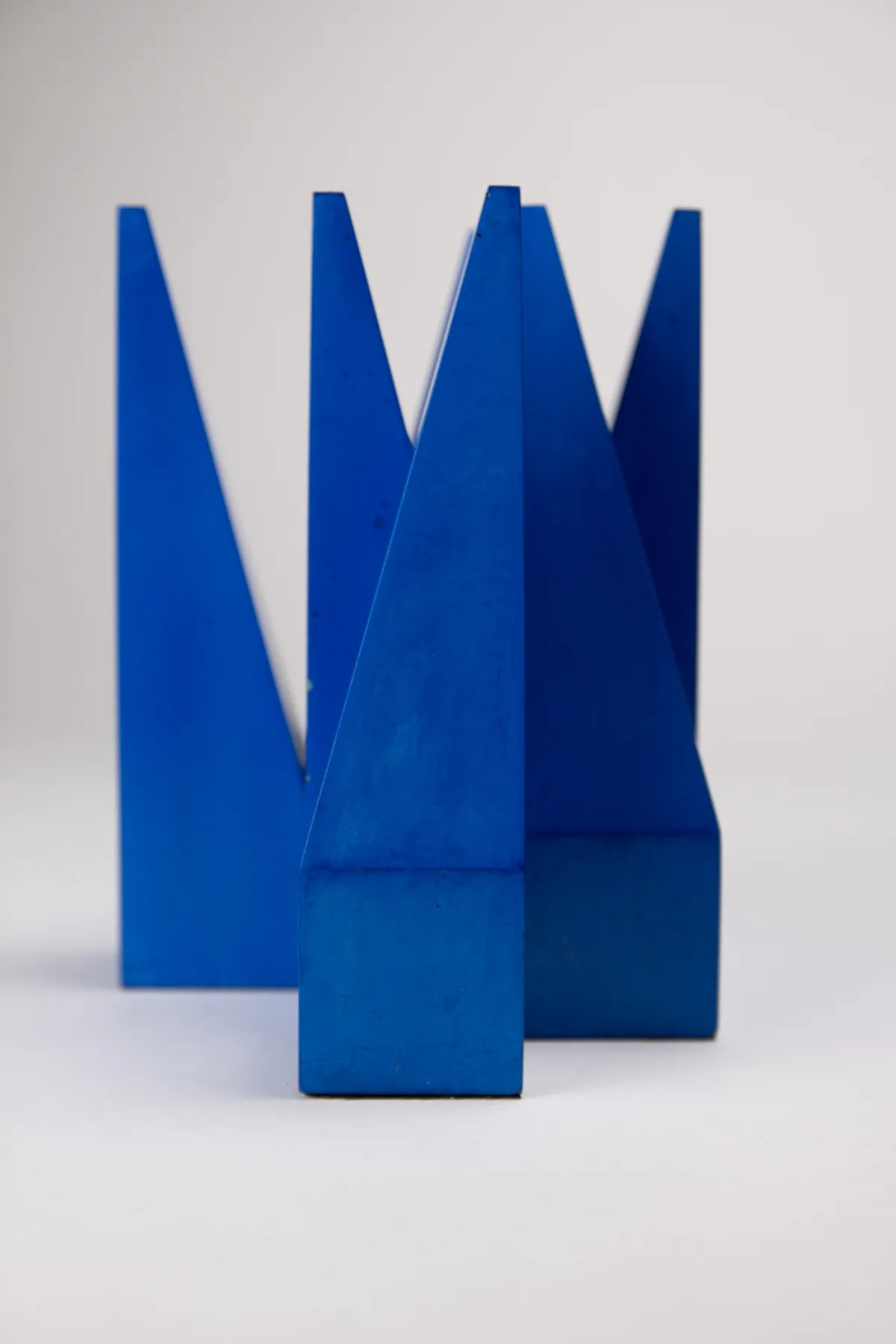
Binary Landscape — Beyond Reality
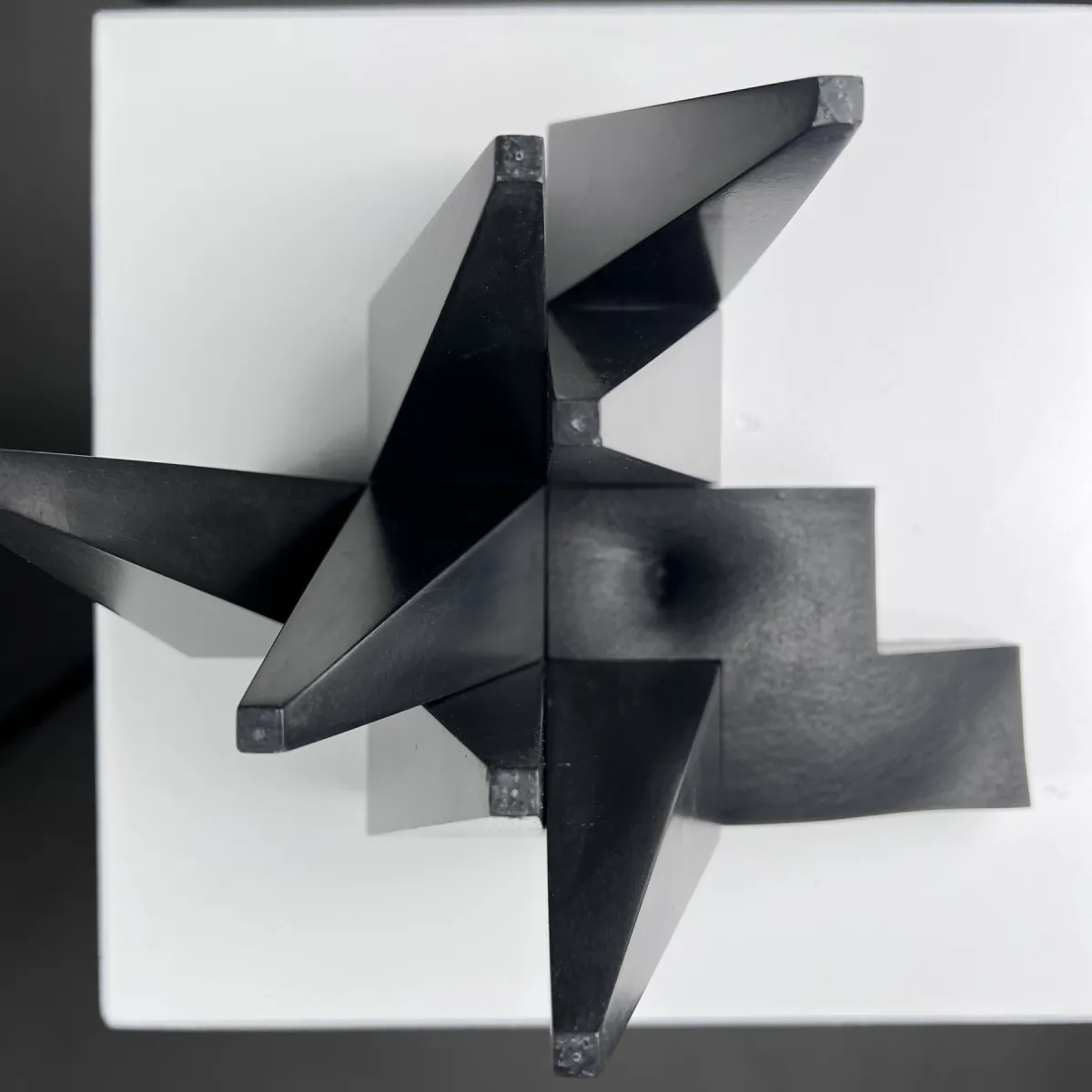
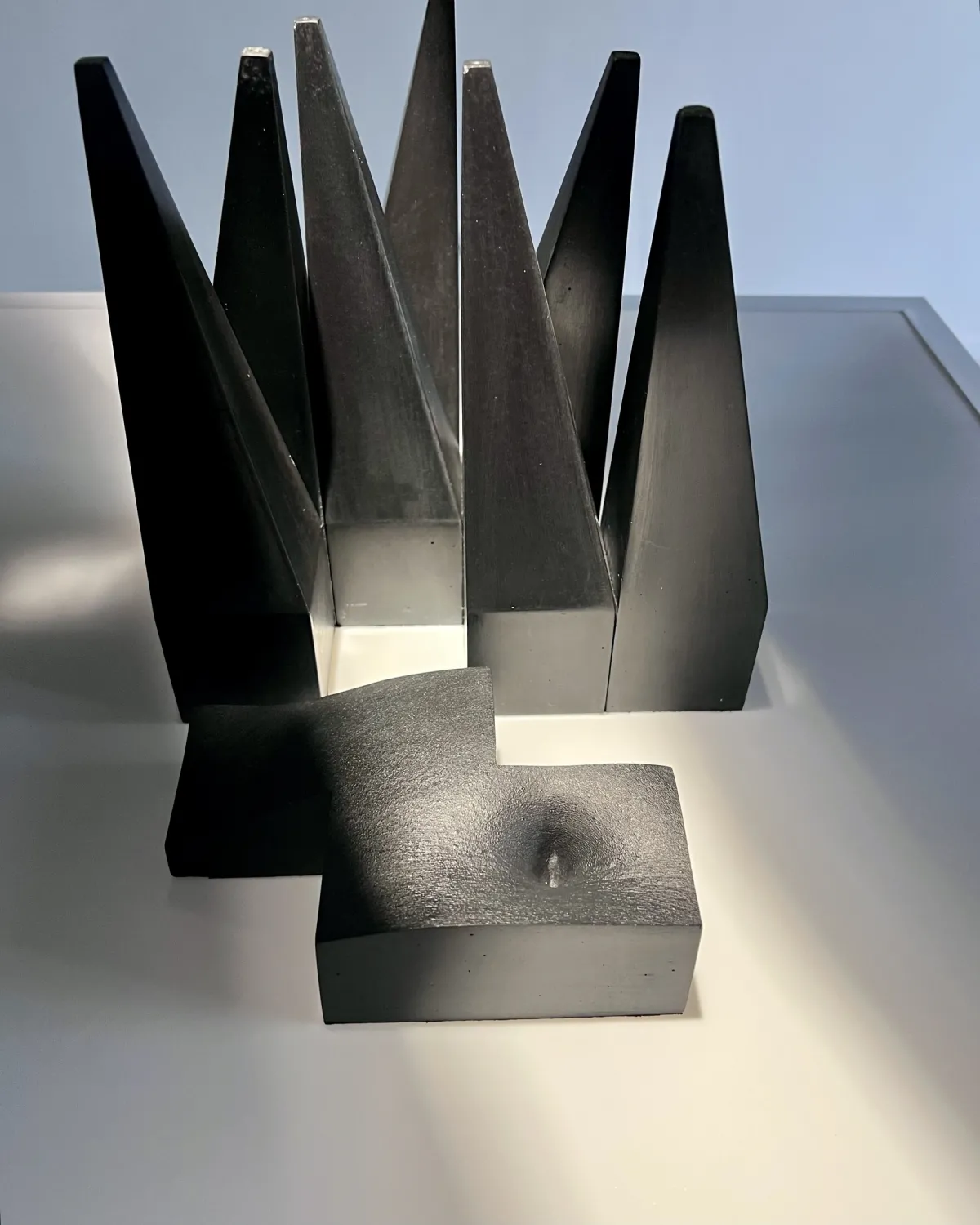
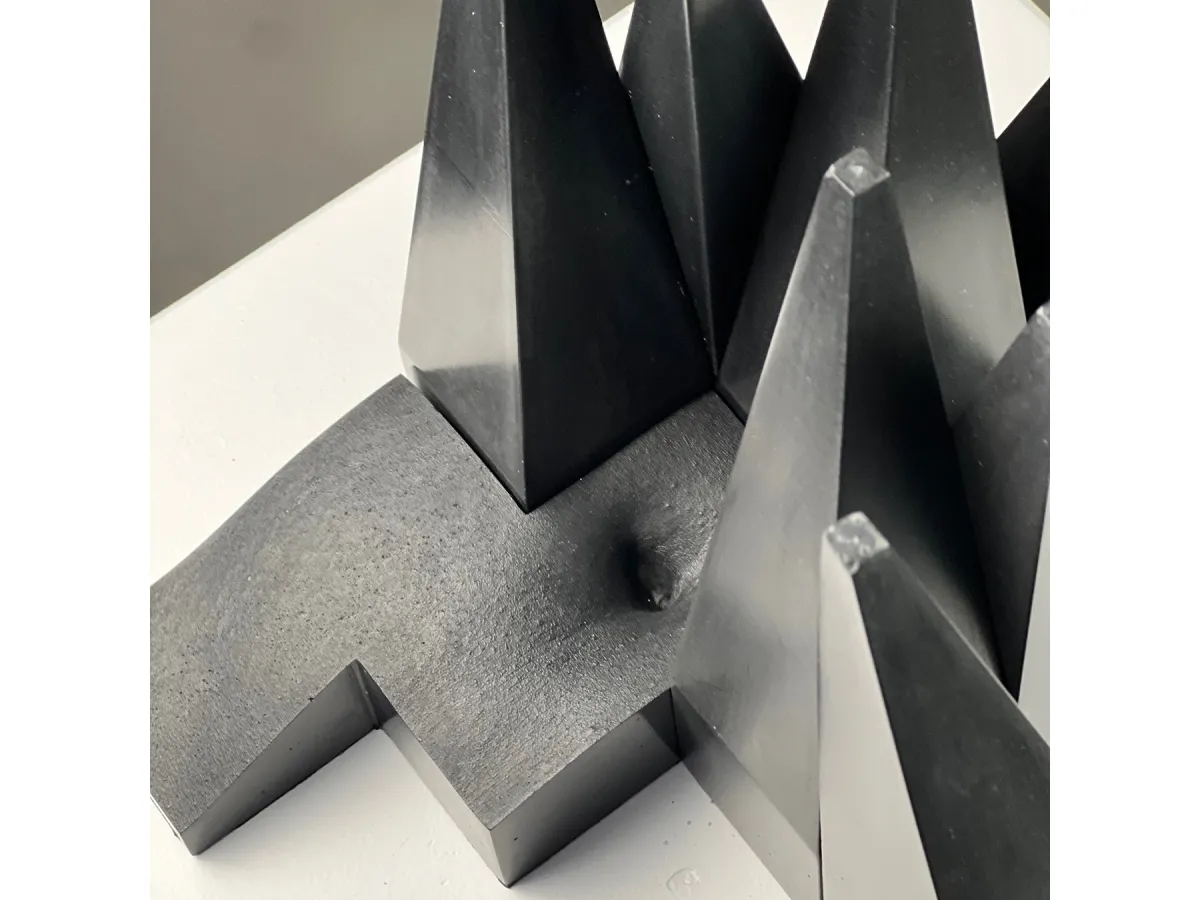
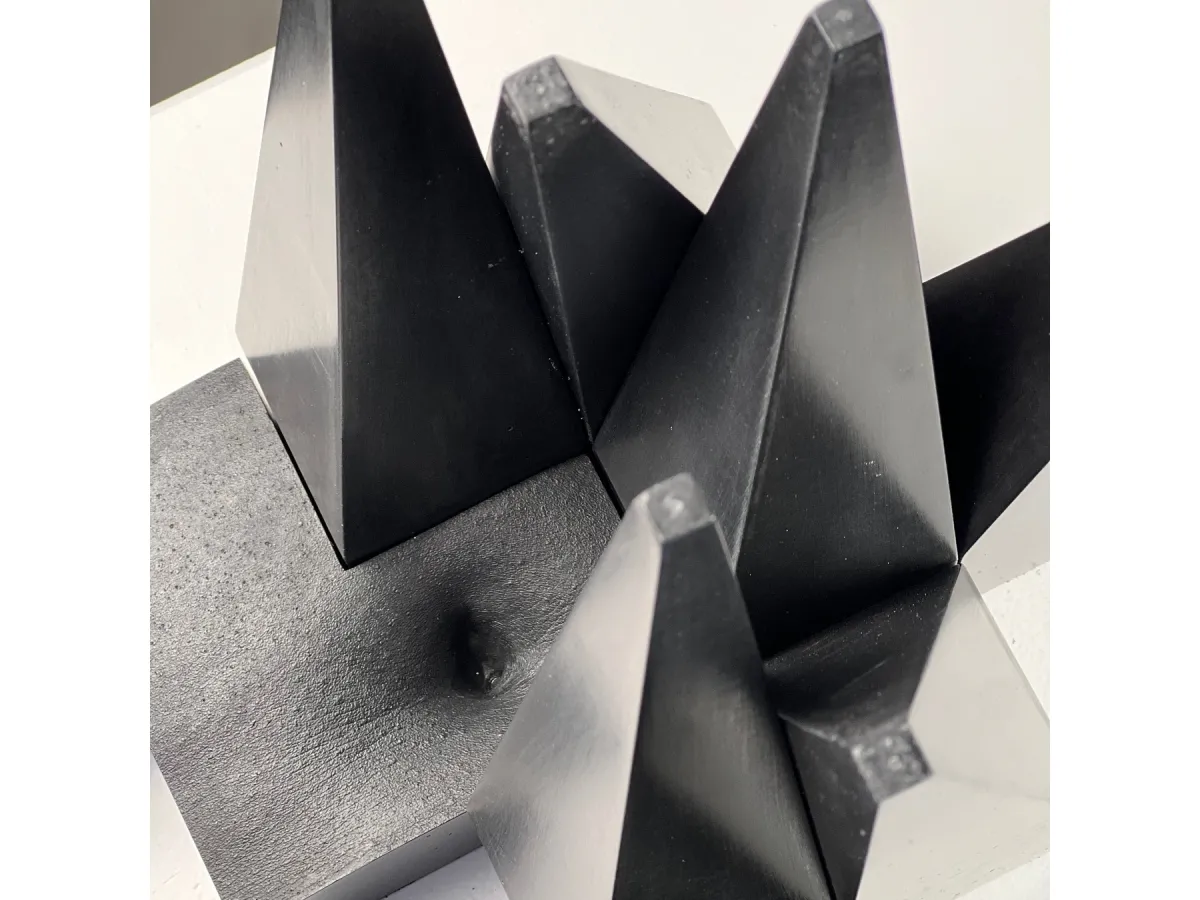
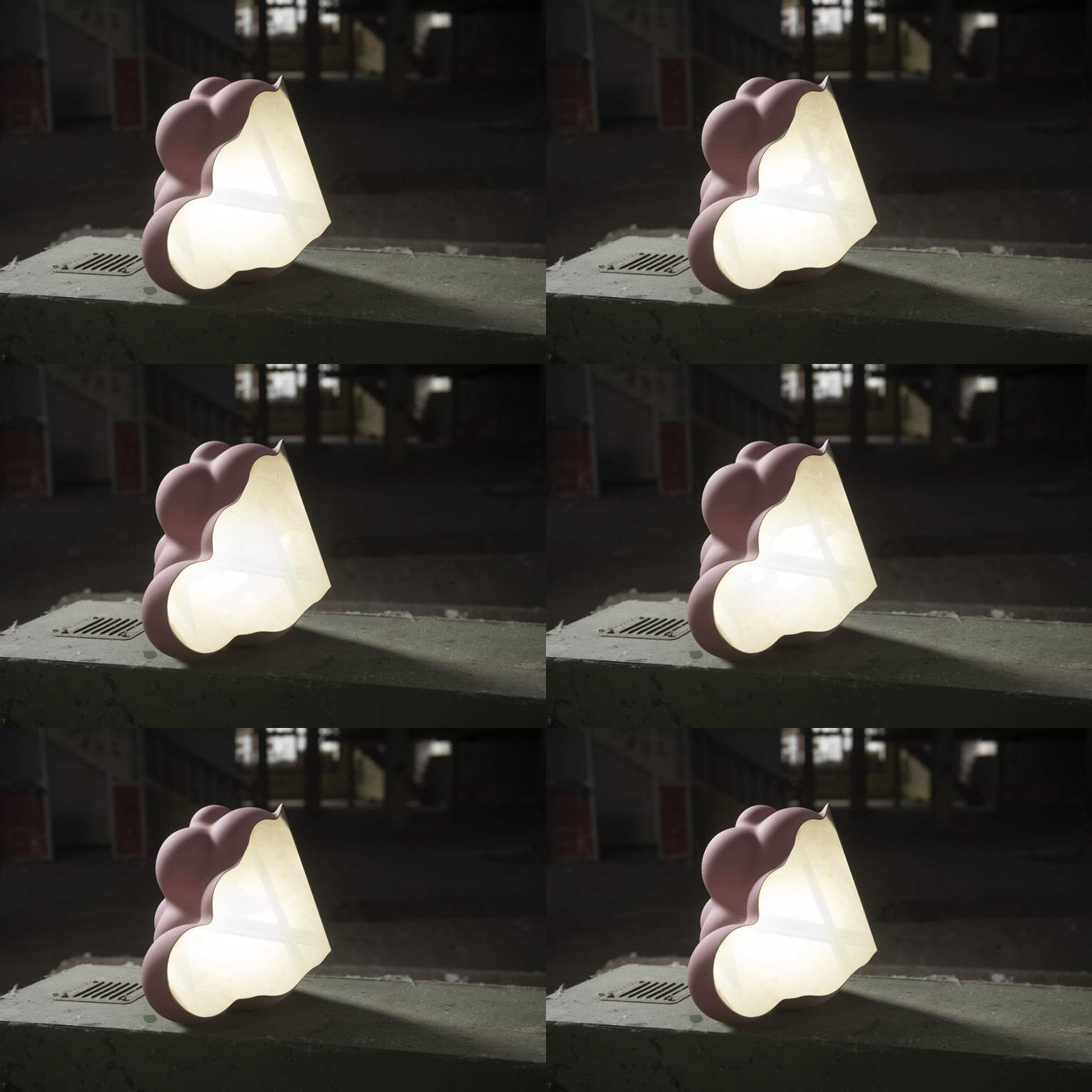
Still in the philosophy of Binary Landscape, this series uses a minimum of shapes. Only the orientation and positioning in space of a single volume give each work its uniqueness. Like binary coding, creating a universe from 1,089 atoms, or composing a society made up of humans of the same kind, it’s the arrangement of the elements that creates uniqueness, not the basic entity itself. The idea is to move away from individuality in favor of the whole, the entirety.
Repetitiveness and reproducibility, explored in this series, are my way of understanding our times. This repetitiveness shows up in mechanized spaces — factories, monoculture fields — and more broadly, in all manufactured objects. But you also see it in social behaviors, which we repeat and imitate, along with this growing need to categorize everything. This trend also touches on desire, which René Girard explored with his concept of "mimetic desire." Once desire, thought, and objects become duplicable and predictable, could we not talk about a kind of "societal fatalism," one that could threaten our free will?
To delve deeper into this thought, it seems interesting to me to point out that repetitiveness leads to predictability. Our behaviors reflect this: consuming standardized manufactured products, visiting uniform restaurant chains, following highly curated media accounts and content. By constantly moving through predictable environments, a person risks losing their ability to adapt to the unexpected. They start expecting reality to match their imagination, their anticipations, and their expectations. This predictability, I think, is a comforting way to project oneself into the future and, at the same time, try to shape one’s own future by creating a reality that aligns with their own perceptions.
The Presence of Human Textures
I’m deeply moved by the Japanese artistic movement Mono-ha, especially the work of Lee Ufan. In this series, I aim to contrast this smooth, cold universe with the rich, complex texture of living things.
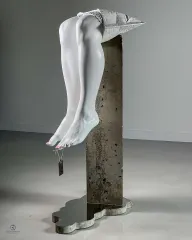
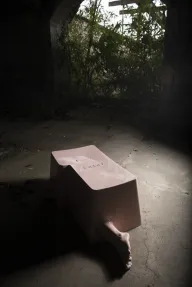
On some sculptures, fragments of the human body appear, as if lost in this cubic world. They act as an allegory for the digital world, where the line between reality and artificial intelligence is becoming increasingly difficult to draw. I chose the navel, an element that fascinates me because of its symbolic meaning. It’s both a scar and a tangible trace of our biological origin, a sign of our belonging to the human lineage. Perhaps I’m also influenced in this approach by my cyberpunk culture?
Taking an imprint on the human body is a voluntary act: it's a way to make reality tangible. The artistic approach I follow aims to eliminate any personal intervention or interpretation; it should only be a 'capture of reality.' I'm trying to create a volume with raw simplicity, in radical contrast to the deafening noise of colors and shapes around me.